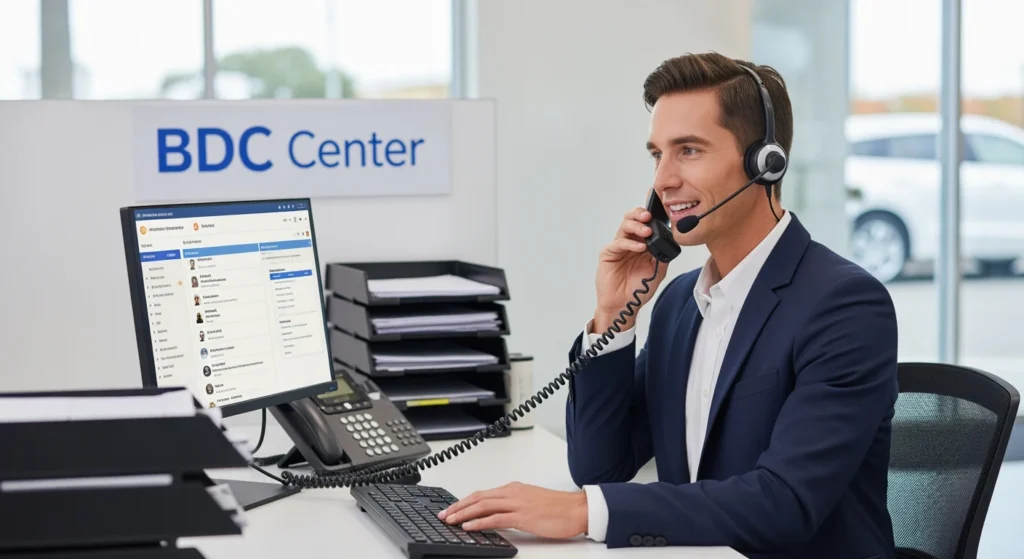
What Is a BDC Representative?
A BDC representative — short for Business Development Center representative — is a dealership team member who specializes in managing inbound and outbound customer communications to generate and confirm showroom appointments. Unlike salespeople on the floor, BDC reps rarely close deals in person. Their job is to convert leads into booked, confirmed appointments that show up ready to buy.
BDC reps work primarily by phone, email, and text. They handle inbound calls from customers inquiring about inventory or pricing, respond to internet leads from the dealership’s website and third-party platforms, and execute systematic follow-up sequences to re-engage prospects who haven’t yet made a decision.
What Does a BDC Representative Do Day-to-Day?
The daily responsibilities of a BDC representative center on one primary outcome: getting qualified buyers into the showroom. The specific tasks that support that outcome include:
- Answering inbound calls — handling customer inquiries about vehicle availability, pricing, financing options, and service appointments with professionalism and a clear goal of booking a visit
- Responding to internet leads — following up on form submissions, chat inquiries, and third-party leads within minutes, not hours
- Outbound follow-up — contacting unsold leads, be-backs, and database prospects through structured multi-touch sequences across phone, email, and text
- Appointment setting and confirmation — booking showroom visits and reducing no-shows through strategic confirmation calls and reminders
- CRM management — logging all customer interactions, updating lead status, and maintaining the data quality that makes follow-up systematic rather than scattered
- Handling objections — responding to price questions, “just browsing” pushback, and competitive comparisons without handing the conversation off to a salesperson prematurely
BDC Representative vs. Sales Consultant: What’s the Difference?
The distinction matters — and confusing the two roles creates problems in both directions.
A sales consultant owns the in-person customer experience from meet-and-greet through the test drive, negotiation, and handoff to F&I. Their primary environment is the showroom floor, and their primary skill set is face-to-face selling.
A BDC representative owns the customer relationship before it reaches the floor. Their environment is the phone, email, and text — and their primary skill is converting digital and phone interactions into confirmed appointments. They’re specialists in remote communication, and that specialization is what makes them effective.
Dealerships that blur this line — asking floor salespeople to handle BDC responsibilities on top of showroom duties, or asking BDC reps to close deals they’re not equipped for — typically see poor results in both areas. The roles require different skills, different metrics, and different training.
What Skills Make a Great BDC Representative?
Communication and Tone Control
Without the visual cues of in-person conversation, BDC reps communicate entirely through voice, word choice, and pace. The best reps sound confident and genuine — not scripted. They adjust tone for the emotional state of the caller, whether that’s an excited first-time buyer or a frustrated customer who’s been bounced around by three different people.
Systematic Follow-Up Discipline
Most leads don’t buy on first contact. The BDC reps who convert the most appointments are the ones who execute their follow-up sequences completely — every touch, every time — rather than giving up after one or two attempts. This requires both discipline and a clear system that removes the guesswork from when to follow up and how.
Objection Handling Without Escalation
Customers routinely ask for pricing, push back on appointment times, or claim they’re “just looking.” A strong BDC rep handles these without handing off to a manager or rushing the conversation. They know how to acknowledge the concern, redirect toward value, and re-anchor to the appointment goal.
CRM Fluency
BDC reps live in the CRM. The quality of their data entry, note-taking, and lead status management directly determines how effective the dealership’s follow-up operation is. Reps who treat the CRM as administrative overhead — rather than as the system that makes their follow-up systematic — consistently underperform.
Resilience and Consistency
BDC work involves a lot of rejection and unanswered calls. The reps who thrive are the ones who don’t take it personally, reset between calls, and bring the same energy to the tenth call of the day as they do to the first.
How BDC Representatives Are Measured
Effective BDC management tracks leading indicators — activities that predict future appointment and sale outcomes — not just lagging metrics like units sold. Key BDC representative performance metrics include:
- Lead response time — how quickly the rep contacts a new lead after it arrives
- Contact rate — percentage of leads reached by phone or responded to via other channels
- Appointment set rate — percentage of contacted leads converted to booked showroom visits
- Appointment show rate — percentage of set appointments that actually arrive at the dealership
- Follow-up completion rate — whether the rep is completing their full follow-up sequence or dropping off after one or two touches
- Calls per day / emails per day — volume metrics that ensure reps are maintaining adequate outreach activity
How to Train BDC Representatives Effectively
BDC representatives need training that’s different from general sales training. The skills are specific — phone tone, objection handling without visual cues, email writing, text message etiquette, CRM discipline — and they require practice in a format that mirrors real BDC work.
Effective BDC training covers:
- Call structure and opening frameworks that establish rapport immediately
- Appointment-setting language that creates commitment, not tentative maybes
- Objection responses for the most common pushbacks in phone and email conversations
- Follow-up sequence design — when to call, when to text, when to email, and when to pause
- Confirmation call techniques that dramatically reduce no-shows
- CRM best practices that keep the team’s data clean and actionable
The best BDC training programs don’t just teach skills in isolation — they build complete systems that reps can execute consistently, day after day, without needing a manager to tell them what to do next.
Frequently Asked Questions About BDC Representatives
What does BDC stand for in a car dealership?
BDC stands for Business Development Center. In an automotive context, it refers to the team — or department — responsible for managing customer communications to generate showroom appointments. Some dealerships call it a Customer Relations Center (CRC) or Internet Sales Department, but the function is the same.
Is a BDC representative the same as a salesperson?
No. BDC representatives specialize in remote communication — phone, email, text — and their primary goal is booking confirmed showroom appointments. Salespeople take over when the customer arrives in person. The roles require different skills and should be measured by different metrics.
How much does a BDC representative make?
Compensation varies significantly by dealership and market. Most BDC reps earn a base salary plus performance bonuses tied to appointments set and shown. High-performing reps at well-structured dealerships can earn competitive total compensation, particularly when the dealership has clear metrics and a strong BDC culture.
What’s the biggest challenge for BDC representatives?
Consistency is the most common challenge. BDC work requires executing the same follow-up sequences completely and professionally across dozens of leads daily — and it’s easy for reps to cut corners when volume is high or motivation dips. This is why systematic training and clear accountability structures matter more in BDC roles than almost anywhere else in the dealership.
How many BDC representatives does a dealership need?
A common benchmark is one BDC rep per 100–150 leads per month, though this depends on the complexity of the follow-up process and how many other responsibilities the rep carries. Understaffed BDCs lead to slow response times and dropped follow-up — both of which cost appointments and sales.