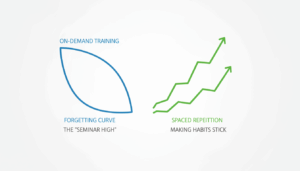
Ask any dealership if they train their team, and the answer is always yes.
But ask what that training actually looks like — and you’ll usually hear about:
- A one-day session last quarter
- A vendor walkthrough
- A few videos saved on someone’s desktop
That’s not training. That’s exposure.
And exposure doesn’t change behavior.
Let’s talk about what real training looks like — and why most stores miss the mark.
1. Training Isn’t Something You Did — It’s Something You Do
One-time events don’t build skill.
Reps forget. Managers drift. Bad habits return.
Effective training is:
- Repetitive – because learning fades
- Interactive – because passive info doesn’t stick
- Observed – because practice needs feedback
- Tied to goals – because behavior needs direction
If your “training” isn’t touching all four — it’s a pep talk, not a system.
2. The 3-Phase Formula of Real Training
Training that actually changes outcomes has a rhythm:
✅ Teach
Introduce the concept clearly. Use real-world context. Keep it simple.
✅ Practice
Roleplay. Simulate. Repeat. Normalize discomfort and build fluency.
✅ Coach
Observe in the wild. Debrief what worked, what didn’t, and what’s next.
Without all three phases, the training loop stays open — and results stay inconsistent.
3. Where Most Dealerships Fall Short
Here’s the trap:
- A vendor runs a killer session
- The team’s hyped for a week
- Managers get busy
- Accountability fades
- Skills decay
- Leadership blames the training
But the problem wasn’t the content — it was the follow-through.
Training isn’t magic. It’s maintenance.
4. How to Build a Real Training System
You don’t need to overhaul everything. Start here:
✅ Weekly skill reps. 20 minutes on a focused behavior. Make it visual, fun, and consistent.
✅ Track who’s improving. Build a scoreboard — not just for results, but for skill mastery.
✅ Coach live. Managers observe and debrief real-world interactions regularly.
✅ Tie training to metrics. Make it clear what behavior connects to which outcomes.
5. Managers Are the Missing Link
The biggest lever in your training system isn’t the material — it’s the manager.
If the desk isn’t coaching, training won’t stick.
If leaders aren’t modeling, reps won’t follow.
Train your trainers first. Everything else scales from there.
Final Thought
Training doesn’t work because you want it to.
It works because you work it.
Make it rhythmic. Make it visible. Make it a system — not a one-off.
Because your people don’t just need new knowledge.
They need leadership that helps them live it.