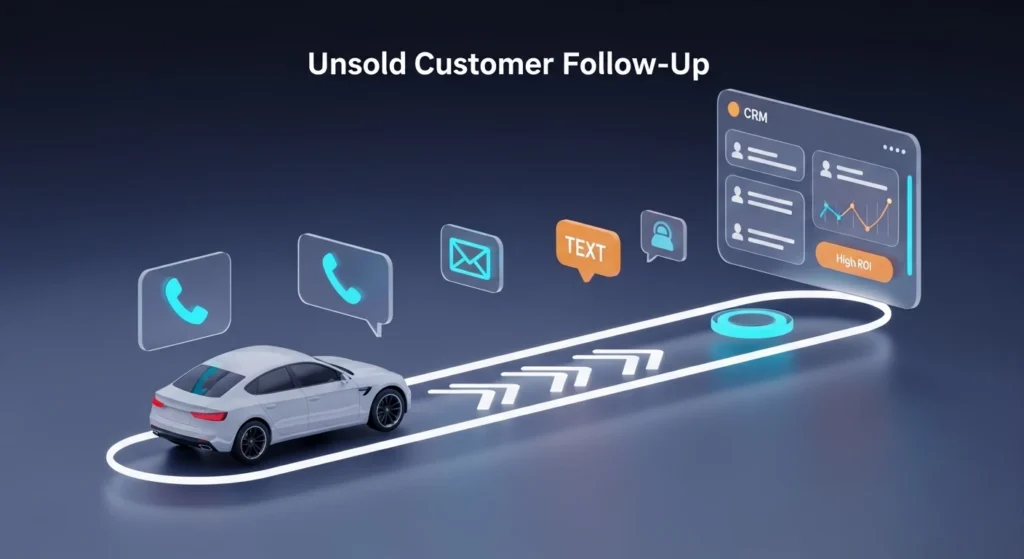
Unsold follow-up is the structured process of staying in contact with customers who visited your dealership but didn’t buy — with the goal of converting them into a sale before they buy from a competitor. It’s one of the highest-ROI activities in variable operations, and one of the most inconsistently executed.
Why Unsold Customers Are Your Best Opportunity
A customer who visited your store didn’t walk in by accident. They were in a buying mindset — they had enough interest to get off the couch, drive to a dealership, and spend time with your team. If they left without buying, it doesn’t mean the opportunity is gone. It means something didn’t close in that visit — price, inventory, timing, a relationship that didn’t fully connect, or an objection that wasn’t resolved.
Most of those things are fixable. And most dealerships give up after one or two follow-up calls without ever finding out which one it was.
The Anatomy of a High-Converting Unsold Follow-Up Process
Day 1: The Same-Day Call
The first follow-up call should happen the same evening the customer visits, or first thing the next morning. This isn’t a close — it’s a check-in. “I wanted to reach out and make sure you got home okay and that we answered all your questions today.” Low pressure, genuine, and it keeps the relationship warm before any competitive follow-up happens.
Day 3: The Value Anchor
The second contact — usually a text or call on day 3 — is designed to re-anchor the customer’s memory on why they liked the vehicle. “I’ve been thinking about you and the [vehicle] you drove on Tuesday. That [specific feature they commented on] — have you had a chance to look at other options that have that?”
Day 7: The New Angle
By day 7, the customer has either bought somewhere else, is still in market, or has cooled off. The third contact introduces a new reason to re-engage: an inventory arrival, a rate change, or simply a genuine check-in. “We just got a [relevant vehicle] in that I thought of you for — want me to send photos?”
Day 14-30: The Long Game
Customers who are still in market 2-4 weeks after their visit are actively comparing options. Contacts at days 14 and 21 — kept simple, non-pressured, and useful — keep your dealership in the consideration set. “Still in search mode? I want to make sure we’re still an option for you.”
The Biggest Mistakes in Unsold Follow-Up
Generic outreach: Calling back with “just checking in” tells the customer nothing has changed and gives them no reason to engage. Every contact needs a specific reason — a new inventory arrival, a rate update, a reference to something specific from their visit.
Stopping too soon: Most reps make 2-3 attempts and give up. Research shows the majority of follow-up conversions happen between attempts 4-8. Stopping early is leaving a significant percentage of sales on the table.
No variation in contact method: Some customers don’t answer calls but respond to texts. Others prefer email. A multi-channel follow-up sequence — call, text, email, repeat — dramatically improves contact rates and keeps the outreach from feeling like spam.
How Proactive Training Solutions Trains Unsold Follow-Up
Our BDC and sales training programs include dedicated unsold follow-up word tracks, sequence templates, and objection handling for the specific pushback follow-up calls generate. AdaptVT delivers unsold follow-up scenarios on demand — including the cold customer at day 10, the customer who says they bought somewhere else, and the prospect who’s ready to re-engage on the right terms.
Frequently Asked Questions
How long should you follow up on an unsold customer?
A structured 30-day sequence with 6-8 contacts is standard for unsold prospects. After 30 days without response, move to a monthly “nurture” cadence that keeps the door open without active pursuit.
What do you say on an unsold follow-up call?
Every call needs a specific reason to make contact — not “just checking in.” Reference something from their visit, mention a relevant inventory update, or introduce a new offer. Give them a reason to engage, not just an obligation to respond.
Should the salesperson or BDC handle unsold follow-up?
Both can be effective. The key is that it’s happening consistently, with a defined process and accountability. Many stores split it — salespeople handle early follow-up (days 1-3) and BDC takes over for the structured sequence from day 7 forward.